Safe Ways to Help a Senior Golden Lose Weight
If your senior golden's waistline has quietly disappeared, you're not alone, it happens to most aging goldens. Here's how to get the weight off safely, without crash dieting a dog whose body needs gentler handling.

Your golden used to trot to the door every time you picked up the leash. Now he ambles over, and you've noticed his waist has kind of... disappeared. The vet mentioned "a few extra pounds" at the last checkup, but honestly, it's been more than a few. This is one of the most common things owners of aging goldens deal with, and it sneaks up so gradually that most people don't notice until the dog is visibly round.
Here's the good news: weight gain in senior goldens is almost always manageable. It just has to be handled differently than it would be for a two-year-old dog who can bounce back from a diet with a few extra runs at the park. Older bodies need a gentler, smarter approach.
Is Your Golden Actually Overweight, or Just "Solid"?
Goldens are a broad-chested, sturdy breed to begin with, so it's easy to write off extra padding as "just how they're built." Before you change anything, it helps to actually check.
Run your hands along his ribs. You should be able to feel them without much pressure, like feeling the back of your own hand. If you have to dig through a layer of padding to find them, that's a sign. Look at him from above, too. There should be a visible waist behind the ribs, a slight hourglass shape. And from the side, his belly should tuck up slightly rather than hang level with his chest.
If none of that's there anymore, it's not a character flaw, it's just extra weight that needs to come off, carefully.
Why This Happens So Easily in Older Goldens
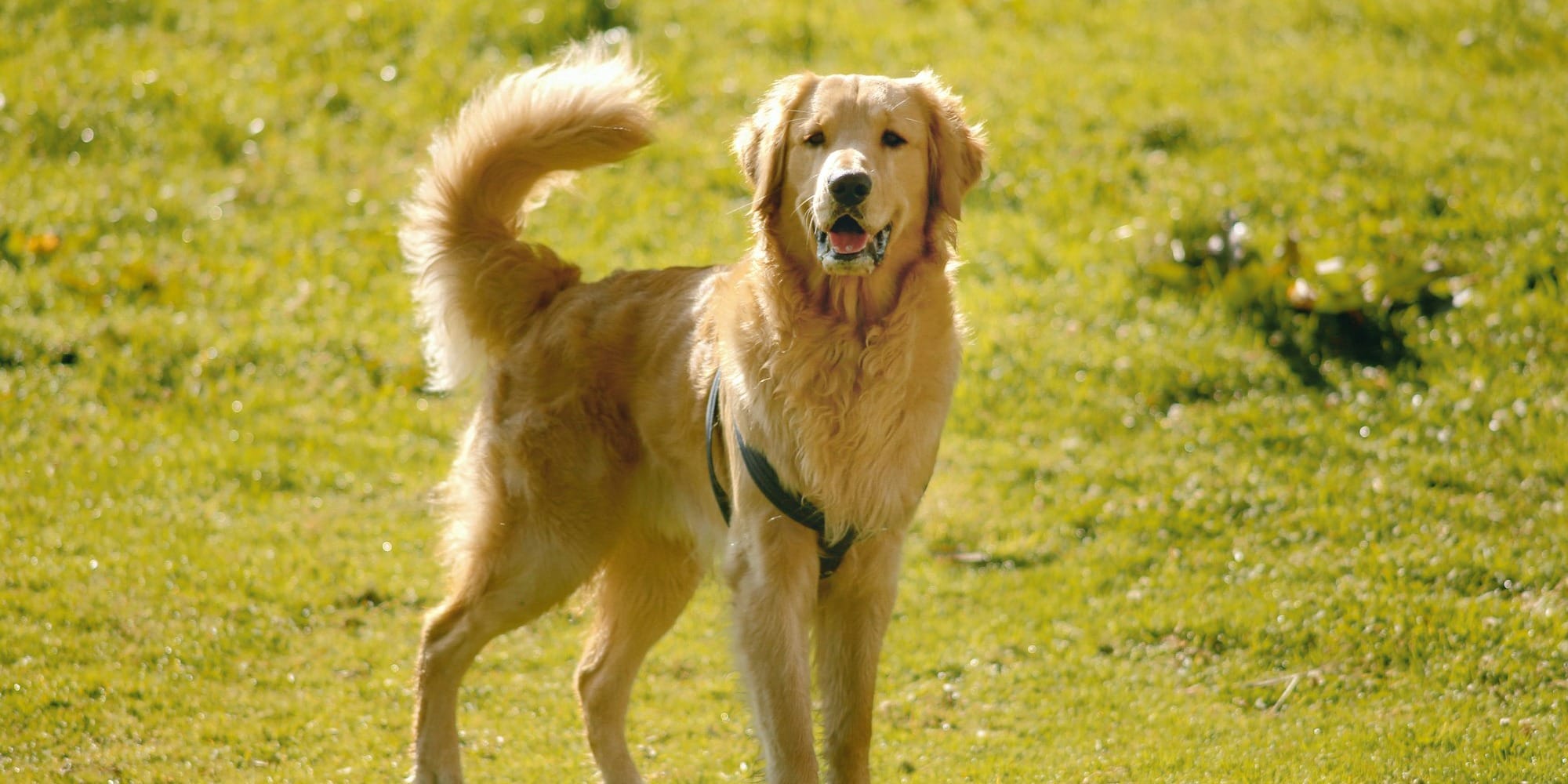
A senior dog's metabolism just doesn't burn calories the way it did at five. Muscle mass naturally declines with age, and muscle is what burns calories at rest. Less muscle means fewer calories burned even if he's eating the exact same bowl of food he always has.
On top of that, arthritis and general stiffness often mean shorter walks, fewer stairs, less zoomies in the backyard. Some goldens also slow down mentally as they age, showing less interest in play or exploring, which cuts activity even further (if you've noticed your dog seeming foggier or more disoriented lately, it's worth reading up on cognitive dysfunction in senior goldens, since that can factor into activity levels too).
So you've got fewer calories being burned, and often the same amount of food, maybe even more treats because you feel bad he can't do as much anymore. The math just doesn't work in his favor.
Why the Extra Weight Matters More Now Than It Did at Five
I'll be blunt: a chubby young dog is a cosmetic issue. A chubby senior dog is a mechanical and medical problem. Every extra pound puts more strain on joints that may already be dealing with arthritis or dysplasia. If your golden has any hip or elbow issues, and a lot of aging goldens do, extra weight makes every single movement harder on those joints (this piece on hip and elbow dysplasia in aging goldens goes into what that day to day strain actually looks like).
Extra weight also stresses the heart and lungs, raises the risk of diabetes, and makes anesthesia riskier if he ever needs a procedure down the road.
Now, people sometimes ask about "the silent killer" in golden retrievers, and usually they're thinking of hemangiosarcoma, a type of cancer that's unfortunately common in the breed and often shows no symptoms until it's advanced. I want to be honest with you: carrying extra weight doesn't cause that cancer. But a heavier dog is a harder dog to monitor. Lumps are harder to feel under extra fat, breathing changes are harder to notice, and a body already working overtime just to move isn't in the best position to handle a serious diagnosis if one comes. Keeping him lean isn't about chasing a number on a scale, it's about giving his whole body less to fight against.
Safe Ways to Actually Get the Weight Back Down

This is the part where I'd push back on a common instinct, which is to just feed less of the same food. That can work for a young dog, but for a senior it often backfires because you end up cutting protein along with calories, and that speeds up muscle loss instead of protecting it.
Start with the food itself, not just the amount
Talk to your vet about switching to a food formulated for senior weight management, one that's lower in calories but still high enough in quality protein to preserve muscle. This is different from just buying a smaller bag of his regular kibble. If you're not sure what to look for on a label, this guide to the healthiest food for a senior dog breaks down what actually matters versus what's just marketing.
Measure his food with an actual measuring cup, not by eyeballing it into the bowl. This sounds almost too basic to mention, but it's the single most common reason "diets" don't work. People underestimate how much a slightly heaping cup adds up to over a month.
Move more, but smarter
You're not training for a marathon here. Two or three short, easy walks a day are usually better on aging joints than one long one. If he's stiff, a slower pace on softer ground (grass instead of pavement) is easier on him. Swimming, if he's ever enjoyed it, is fantastic for older dogs because it burns calories without pounding on the joints at all.
If your golden has gotten a bit set in his ways about walks or naps, it's genuinely not too late to reshape some habits. This piece on whether you can train an older dog applies just as well to goldens and covers how to build new routines without frustrating a dog who's used to doing things his way.
Get honest about treats
This is the one nobody wants to hear. Table scraps, the biscuit he gets every time you leave the house, the bites off your plate at dinner, they add up fast, and for a lower-calorie senior body, they can undo an entire day's careful feeding in one handful. Swap in green beans, small pieces of carrot, or a few pieces of his own kibble set aside from the daily amount instead of extra food on top of it.
Foods to keep him away from altogether
A few things are worth avoiding entirely, not just in excess, especially once weight and joint health are already a concern:
- Fatty table scraps like gravy, skin, or bacon (hard on the pancreas, and pancreatitis is no joke in older dogs)
- Anything high in sodium, which can worsen heart or kidney strain
- Grapes, raisins, onions, and anything containing xylitol
- Bread, pasta, and other simple carbs that add calories without any real nutritional payoff
Don't Crash Diet an Older Dog
I want to be really clear about this one. A senior dog should lose weight slowly, generally no more than about 1 to 2 percent of body weight per week, and that's something your vet can help you calculate based on his current weight and target. Losing it faster than that risks burning through muscle instead of fat, which leaves him weaker, not healthier.
Skipping meals or drastically slashing portions overnight isn't the answer either. It's also worth ruling out medical causes before you assume this is purely about diet and exercise. Thyroid issues, for instance, can cause weight gain in older dogs even when eating habits haven't changed, and that's something only bloodwork can confirm. This is exactly the kind of thing worth bringing up at his next visit, since consult your veterinarian applies here more than almost anywhere else in senior dog care.
It's also worth noting that weight patterns can look different across breeds even among retrievers. If you're curious how this compares in a similar dog, this look at whether Labradors lose weight as they age shows how the same aging process can play out with a slightly different set of challenges.
A Few Honest Answers

How long does it usually take to see results?
With steady, sensible changes, most owners start noticing a difference in energy and mobility within four to six weeks, even before the scale shows a dramatic number. That earlier energy shift is honestly the part I'd pay most attention to, since it tells you his body is starting to move easier.
Should I weigh him at home or just wait for vet visits?
A monthly weigh-in, even a rough one using a bathroom scale (weigh yourself holding him, then subtract your own weight), gives you a much better read on progress than waiting three or four months between vet visits and hoping for the best.
Is it normal for weight loss to slow down partway through?
Yes, and it doesn't mean something's wrong. As muscle mass improves and metabolism adjusts, the rate of loss often plateaus for a few weeks before continuing. This is where sticking with the plan matters more than tweaking it every time progress stalls.
Getting the weight back down on an older golden isn't about punishing him or turning mealtime into something stressful. It's a slow, steady adjustment, a little less food, a little more movement, a lot more honesty about treats, done with patience rather than urgency. Give it a few months of consistency, and you'll likely see the dog underneath the extra weight start to come back, moving easier and enjoying his walks again.


